
ImmixBio N-GENIUS Sterically-Optimized Cell Therapy Platform
Our N-GENIUS platform, with EXPAND technology, has produced our pioneering lead candidate, CAR-T NXC-201, which has demonstrated an enhanced tolerability profile with the potential to reduce hospitalizations.
Hear From Clinicians
What is NXC-201 CAR-T Therapy?
Each of our bodies has an immune system that recognizes and eliminates disease on a daily basis. When AL Amyloidosis emerges from our own body, however, the diseased cells are able to evade the immune system.
So how do we allow the body to recognize the diseased cells?
We believe the answer is NXC-201 CAR-T cell therapy.
NXC-201 CAR-T therapy, or chimeric antigen receptor T-cell therapy, is a type of immunotherapy that uses the patient’s own immune cells, modified with ImmixBio proprietary technology, to create NXC-201, which is then introduced into the patient’s body.
Then the patient’s modified NXC-201 CAR-T cells are able to recognize and eliminate diseased cells, with up to a 89% complete response rate in the case of relapsed/refractory AL Amyloidosis.
Introducing NXC-201
N-GENIUS Platform
U.S. observed prevalence of AL Amyloidosis estimated to reach 30,506+ patients by the end of 2026. No FDA approved treatments available for relapsed/refractory AL Amyloidosis
Due to its nonspecific symptoms, such as fatigue, weight loss, and swelling, the condition is often misdiagnosed or detected in later stages.
THE SCIENCE BEHIND THE BREAKTHROUGH
NXC-201: A NEW KIND OF CAR-T
We believe NXC-201 (formerly HBI0101) is the only “Single-Day CRS” BCMA-targeted CAR-T cell therapy that is uniquely suited to target AL Amyloidosis and immune-mediated diseases.
It is being studied in a comprehensive clinical development program for the treatment of patients with relapsed/refractory AL amyloidosis, and expanding into immune-mediated disease indications.
These trials build on a robust NXC-201 clinical dataset initiated in February 2021. NXC-201 has been awarded Orphan Drug Designation (ODD) by the FDA and EU and Breakthrough Therapy Designation and Regenerative Medicine Advanced Therapy (RMAT) by the FDA in AL Amyloidosis.
NXC-201 Key Characteristics
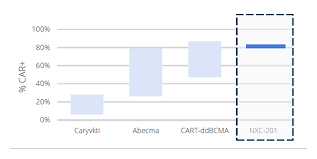
High Transduction Efficiency
(Ensures manufacturability)
*Carvykti data presented at ASH 2019; Abecma data presented at ASH 2017. CART-ddBCMA source Arcellrx
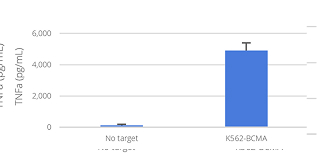
Low Tonic Signaling
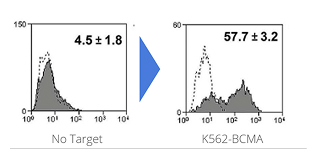
Anti-Exhaustion Capability
(Increased Persistence may lead to efficacy over an extended period of time)
NXC-201 was co-cultured overnight then analyzed by flow cytometry for the expression of 4-1BB
NXC-201 Overcoming
Neurotox and CRS
All BCMA CAR-Ts are not created equal.
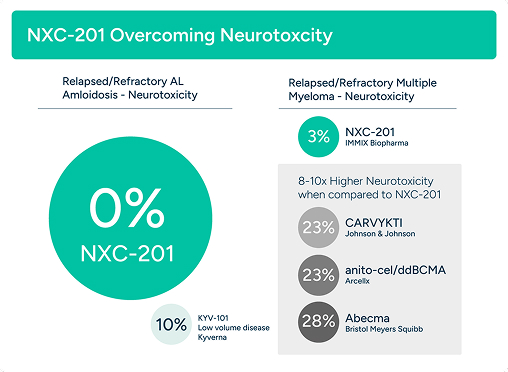
Neurotoxcity
Neurotoxicity, defined as the presence of at least one
neurological symptom appearing after treatment infusion.
NXC-201 overcomes the challenges of currently approved BCMA CAR-Ts by having 0% neurotoxicity (0/45) in AL amyloid patients and 3% neurotoxicity (2/63) in multiple myeloma patients. This is 8 to 10x less neurotoxicity when compared to current BCMA CAR-T treatments.
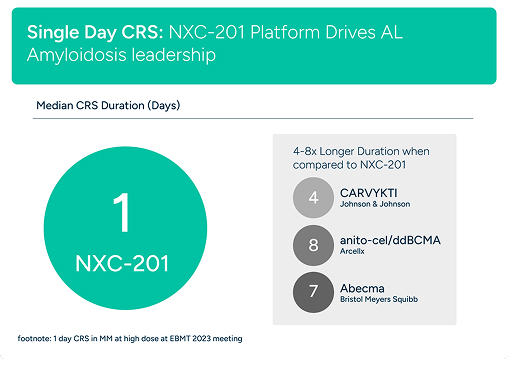
Cytokine Release Syndrome (CRS)
Cytokine Release Syndrome (CRS) is a condition that occurs when the immune system overreacts to an infection or treatment, releasing an excessive amount of cytokines into the bloodstream. This can lead to a range of symptoms, including fever, rash, and organ dysfunction.
NXC-201’s short CRS duration makes it uniquely suitable to treat ALA patients (in whom the #1 source of mortality is heart failure)
Cardiovascular stress is the key determinant for ability to treat relapsed/refractory ALA patients. A long CRS duration causes extended cardiovascular stress.
Want to Dig Deeper?
Dive into the science behind our breakthroughs. Explore detailed presentations and abstracts that illuminate the cutting-edge research driving our therapies forward. Gain a deeper understanding of our scientific foundation and its implications for treatment.